Positive Sales Mindset
How High Performers Think When Results Matter
A positive sales mindset isn’t about hype, affirmations, or forcing optimism when results are slow.
It’s about how you interpret what’s happening — and how that interpretation shapes your language, decisions, and behaviour in sales conversations.
In selling, effort alone does not guarantee results.
Your ability to think clearly under pressure determines how effectively you use that effort.
That’s what a positive sales mindset really is.
What a Positive Sales Mindset Really Means in Sales
At its core, a positive sales mindset is the ability to remain clear, steady, and responsive, regardless of outcomes.
It combines:
- resilience without emotional hardening
- confidence without ego
- optimism without denial
Instead of asking:
“Why is this happening to me?”
The salesperson with a strong positive sales mindset asks:
“What does this tell me about the situation — and what’s the most useful next move?”
This shift may sound small, but it changes your tone, your presence and the way you respond to the prospect.
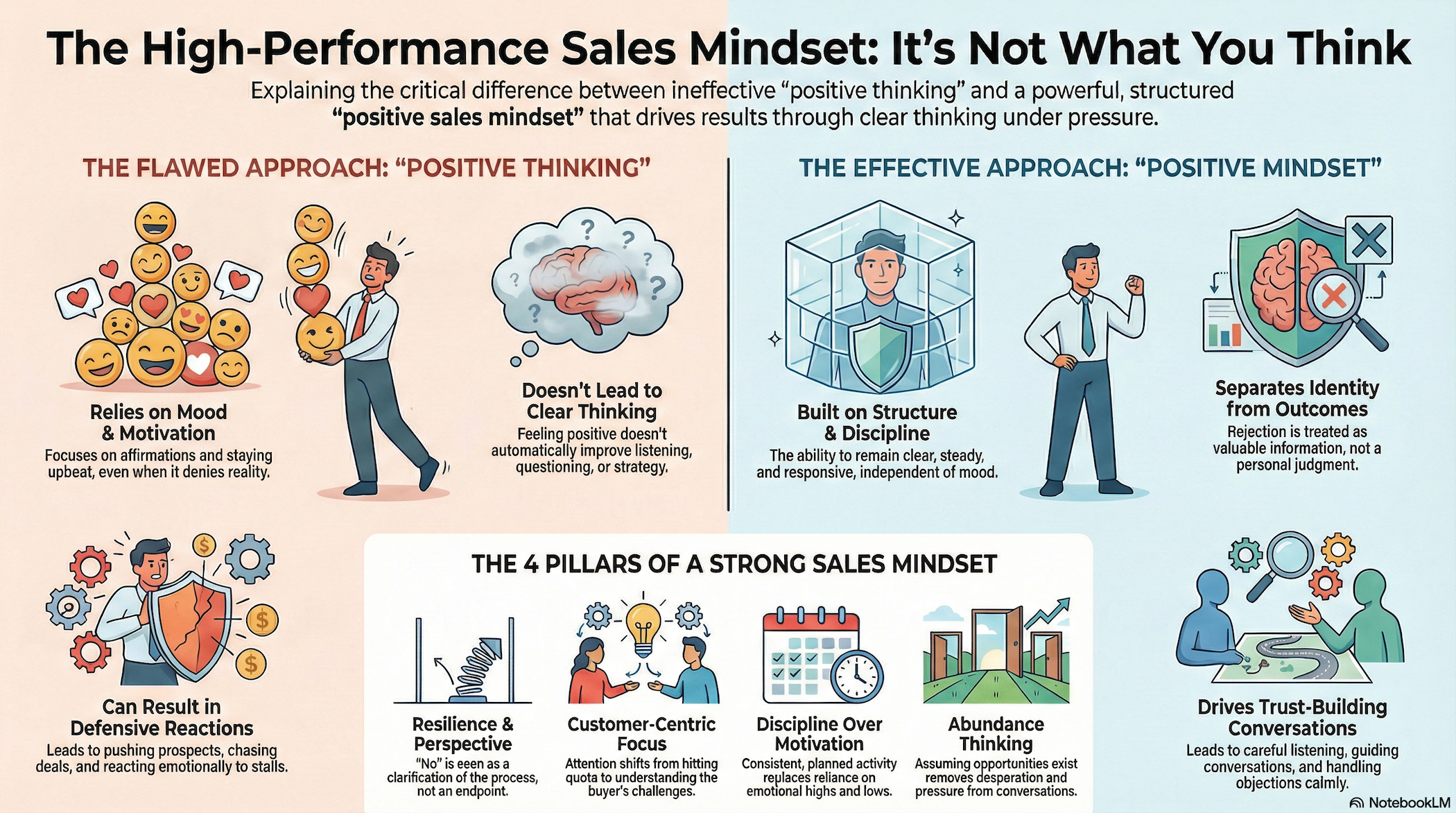
Why Positive Thinking in Sales Isn’t Enough on Its Own
Positive thinking in sales is often promoted through visualisation, affirmations, and staying upbeat regardless of circumstances.
While optimism can support energy and persistence, it has a limitation:
thinking positively doesn’t automatically lead to thinking clearly.
Sales conversations do not improve simply because a salesperson feels positive.
They improve because the salesperson:
- listens more carefully
- asks better questions
- responds rather than reacts
- stays curious instead of defensive
That’s why a positive sales mindset is less about emotion and more about interpretation in the moment.
Mood vs Mindset: A Critical Sales Distinction
Mood is temporary.
Mindset is structural.
You can feel flat, tired, or frustrated — and still sell effectively — if your thinking remains disciplined.
A healthy selling mindset allows you to:
- separate rejection from identity
- avoid chasing or pressuring prospects
- stay composed when deals stall
- maintain authority without force
This is one reason experienced salespeople often appear calm under pressure.
They understand that they can influence the conversation without controlling the outcome.
The Thinking Patterns Behind a Positive Sales Mindset
A positive sales mindset is supported by several consistent patterns of thinking.
Resilience and Perspective
Rejection is information, not a judgement of your value.
A “no” may reveal that there is no genuine fit, that the timing is wrong or that something remains unresolved.
Belief Without Attachment
You believe in the value of what you offer without needing every buyer to agree with you.
This allows you to recommend your solution confidently while respecting the prospect’s decision.
Discipline Over Motivation
You continue to prepare, prospect and follow up even when you do not feel particularly motivated.
Your behaviour is guided by purpose and good habits rather than emotional highs and lows.
Constructive Interpretation
When a deal stalls or a conversation goes badly, you resist the urge to assume the worst.
Instead, you ask:
“What does this result tell me—and what is the most useful response?”
Together, these patterns create a positive sales mindset that feels grounded rather than forced.
How a Positive Sales Mindset Shows Up in Real Conversations
Mindset reveals itself through language.
Salespeople operating from a positive sales mindset tend to:
- speak more calmly
- pause instead of filling silence
- handle objections without defensiveness
- ask what remains unresolved instead of immediately trying to overcome resistance.
Prospects often notice the difference.
The conversation feels less reactive and pressured because the salesperson is not treating every hesitation as a threat.
How to Develop a Positive Sales Mindset
Building a positive sales mindset does not require daily hype rituals or pretending to feel enthusiastic.
It requires better thinking habits.
Separate the result from your identity
A lost sale does not prove you are a poor salesperson.
The result may reflect timing, fit, competition, budget or something you failed to uncover. Treat it as feedback rather than a judgement of your self-worth.
Review the conversation, not just the number
Do not stop at:
“I lost the sale.”
Ask what happened.
Where did the buyer hesitate? What did you assume? What information might still have been missing?
Replace forced optimism with curiosity
You do not have to tell yourself:
“Everything will work out.”
A more useful question is:
“What might I be missing, and what can I learn from this?”
Protect the next conversation
Do not allow one difficult buyer or disappointing result to determine how you approach the next prospect.
Pause, reset and enter the next conversation prepared to listen rather than expecting the same outcome.
Over time, these thinking habits become more natural, and setbacks become less likely to control your behaviour.
Where a Positive Sales Mindset Fits
A positive sales mindset is one part of your broader selling mindset.
t also supports Buyer-Responsive Selling by helping you remain calm, curious and constructive when buyers hesitate or conversations become difficult.
Your selling mindset shapes how you see your role, the buyer and the purpose of the conversation.
Your positive sales mindset helps you remain constructive when the conversation becomes difficult or the result disappoints you.
It does not replace sales skill, preparation or strategy.
It helps you continue using those skills thoughtfully when pressure could otherwise make you defensive, impatient or desperate.
To Sum it Up
Sales does not reward forced positivity.
A positive sales mindset is not about convincing yourself that everything is fine or believing every opportunity will end well.
It is about interpreting what happens in a way that helps you remain clear, composed and useful.
You can be disappointed without becoming defeated.
You can care about the result without allowing it to control your identity.
And you can remain optimistic without ignoring what the situation is telling you.
The question is not simply:
“How do I stay positive?”
A better question is:
“How can I think about this in a way that helps me respond effectively?”
That is the real value of a positive sales mindset.
- Home
- Sales Thinking
- Positive Mindset