Internal Buyer Alignment
Sometimes the buyer isn't uncertain about your solution.
They're uncertain about whether their organisation can successfully say yes to it.
In B2B selling, the person you are speaking with may understand the problem, see the value in your solution and even want to move ahead.
But that does not mean the organisation is ready to make the same decision.
Other people may need to support it. Budgets may need to be approved. Existing projects may be affected. Technical, operational or implementation concerns may still need to be resolved.
A purchase can create change within an organisation to it's processes and procedures across multiple departments of the business.
That is why understanding the buyer means understanding more than the individual. You also need to understand, as far as you reasonably can, how the organisation around them needs to come together before a decision can move forward.
Sharon Drew Morgen makes this distinction particularly clearly. A buying decision can involve management, stakeholders, budgets, rules, relationships and existing initiatives — not simply whether the product solves the stated problem.
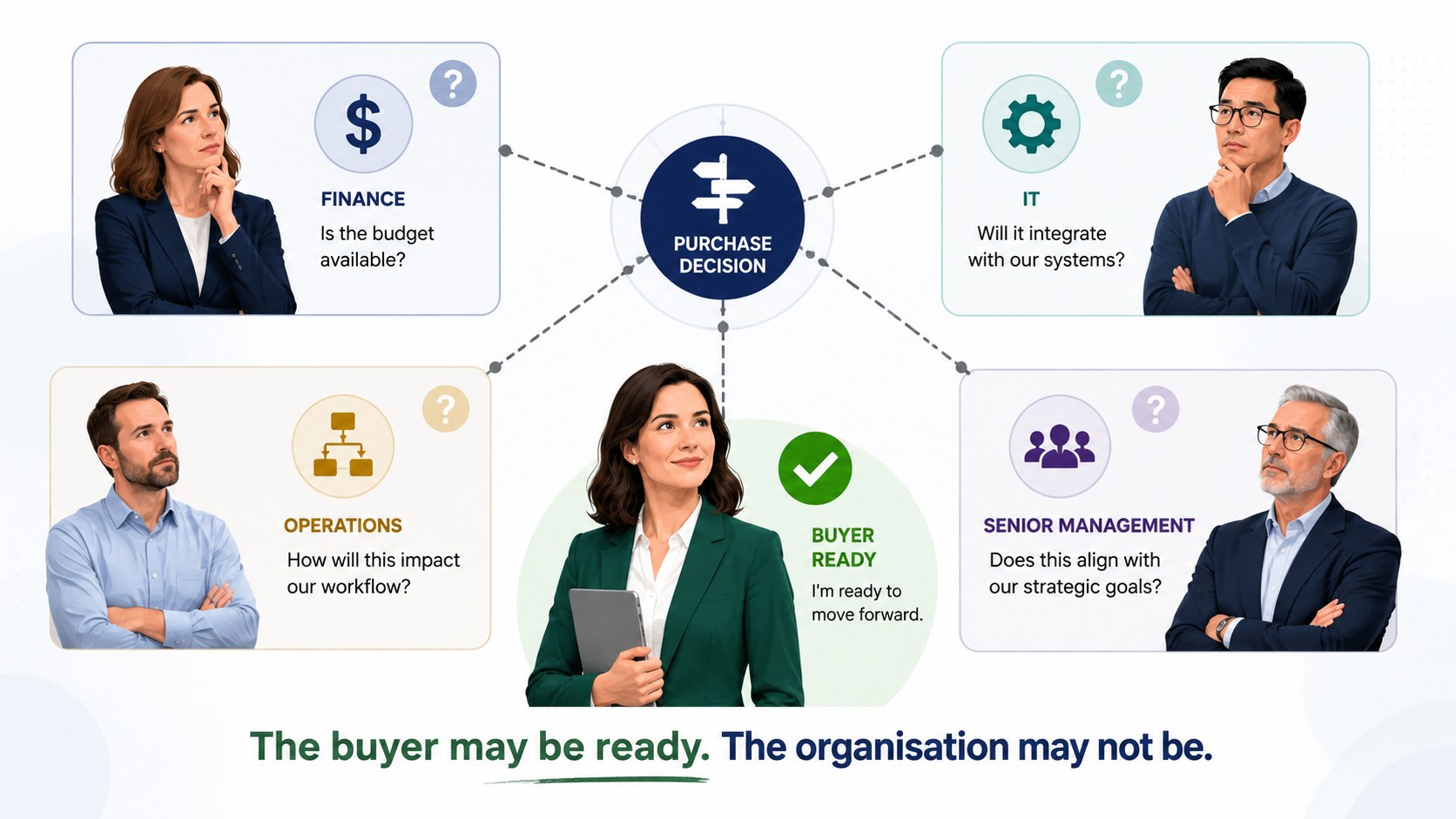
A Good Solution Can Still Stall Internally
One of the most frustrating situations in selling is when everything appears to be going well but nothing happens.
The buyer likes the idea., it makes sense.
You have answered their questions. Then, nothing ?
Someone new becomes involved. Finance has concerns. Management wants more information. Production want to know more. R&D want to justify it's worth their time looking at it. An existing supplier relationship becomes important.
The buyer just says:
“I need to discuss this internally.”
That does not necessarily mean the buyer has changed their mind.
The obstacle may be that the organisation has not yet worked out how to accommodate the change.
Buyers often have to consider the people, relationships, budgets, rules and initiatives that could be affected before they can safely introduce something new.
This is one reason an apparently good opportunity can stall even when there is genuine interest.
Stop Looking for “The” Decision-Maker
Traditional sales advice often tells you to find the decision-maker. There may be a person who signs the agreement, but ...
Maybe the decision maker is a committee and that committee may be formal or just loose relationshiops within the company
Someone:
- may control the budget.
- may have to evaluate the change
- may have to implement the solution.
- may use it every day.
- may influence senior management.
- may be able to quietly stop the decision.
So rather than asking:
“Who is the decision-maker?”
a better question is:
“How does a decision like this actually get made here?”
The people who ultimately matter are not always obvious at the beginning.
Additional decision-makers can appear late because the full internal decision system has not yet been uncovered.
Help the Buyer Work Out What Has to Line Up
You cannot fully understand the internal workings of another organisation.
The buyer lives inside that system. You don't.
They understand the personalities, history, politics, relationships, previous decisions and unwritten rules in ways an outsider never can.
Your role is therefore not to tell the buyer how their organisation should make the decision.
It is to help them think it through.
Questions such as these can help:
- Who else would be affected if you made this change?
- Who would need to be comfortable with it?
- What concerns are they likely to have?
- Is there anything already underway internally that this would need to fit around?
- What could make implementation difficult even if everyone agreed the idea itself made sense?
- What would need to happen internally before you could confidently move ahead?
This is close to Morgen's idea of helping buyers identify the organisational variables that have to align before a new solution can be introduced.
You are not trying to manipulate the internal decision.
You are helping the buyer see the decision more clearly.
Internal Alignment Is Part of Decision Confidence
Buyer uncertainty is not always uncertainty about the product.
A buyer may already believe:
“This could solve our problem.”
But still be wondering:
“Can we actually make this work inside our organisation?”
or
They don't yet have the buy in from others in the organisation
Change can involve risk, disruption, competing priorities and the willingness of other people to support change.
The buying process often requires buyers to work through internal and systemic issues before the product decision can safely be made.
So when a buyer hesitates, pushing harder on features, benefits or urgency may miss the real issue.
Sometimes the most useful thing you can do is help them discover what still has to line up internally before they can move forward with confidence.
That is a central part of Buyer-Responsive Selling.
Further Reading
As I build this section, these pages will explore the subject in greater depth:
How B2B Buying Decisions Really Get Made
Why organisational buying involves much more than one person deciding whether they like your solution.
Stop Looking for “The” Decision-Maker
How to understand the people who influence, approve, fund, implement or potentially block a B2B decision.
Helping Buyers Build Internal Buy-In
How to help your contact think through the internal concerns that must be resolved before the organisation can confidently move ahead.
And for the individual side of buyer decision-making, see:
- Home
- Internal Buyer Alignment