Tom's Sales Journey
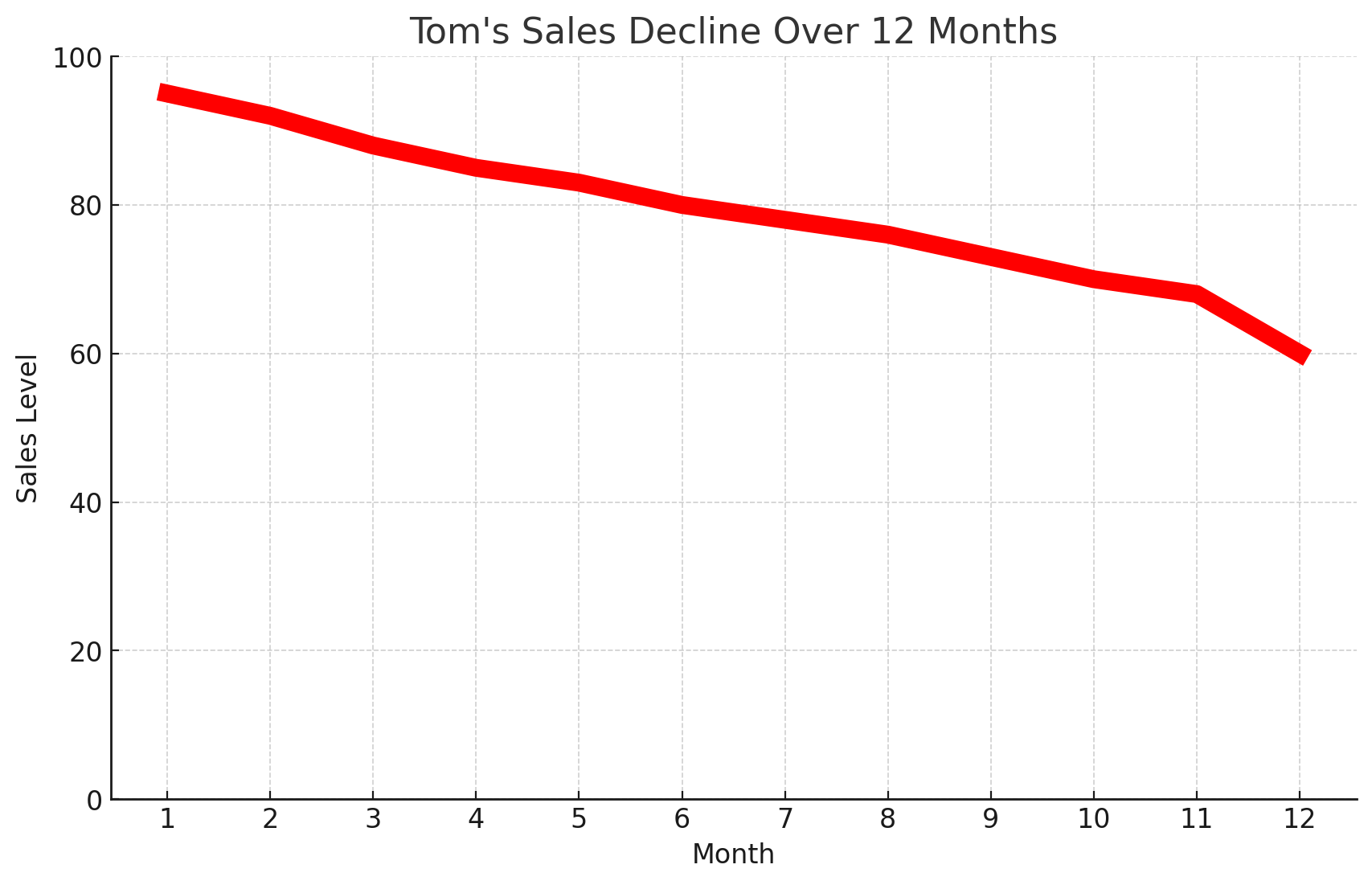
Tom had been in sales for over two decades. He’d ridden the highs of strong economies, juicy commissions, and fast-closing deals. Scripts, rapport-building tricks, objection-handling templates—he’d tried them all. And for years, they worked. But now?
Lately, something was off. Things had changed.
Every day, he showed up and followed the playbook that had served him so well. Buyers weren’t the same. They came to meetings guarded, skeptical, inattentive and already halfway down a decision path that didn’t include him. Even those clients he had dealt with for a long time now seemed as if they didn’t trust him. If he managed to get a meeting at all, it felt like he was interrupting—like he was one more obstacle in a long day they didn’t have time for. Or like they’d researched on the web and already made a decision.
With new prospects The trust that once came easily now felt elusive.
Tom noticed even his cold outreach was falling flat. His meetings, when he got them, were harder to move forward. Decision-making had slowed down. Objections came earlier. Where once he could count on his charm and experience, now he was being met with silence, delays, and polite brush-offs. Sometimes prospects disappeared without a trace.
The worst part wasn’t the lost deals. It was the feeling that he was becoming invisible.
At first, Tom brushed it off. A bad quarter. Some poor timing. He blamed the leads. Then the marketing team. Then the economy. But the numbers didn’t lie. The months wore on, the pressure mounted. His sales were down—month after month. And the worst part? He didn’t know why. He was doing everything he used to do. Everything that used to work.
His confidence slipped. ….
He used to come into the office and look at the sales leaderboard and smile but now he was scared to gaze upon it in case he was languishing at the bottom. How could he face the other reps and the admin staff in the office?
He started waking up with a heaviness in his chest. That familiar fire he used to feel heading into a call was gone—replaced by a sense of dread of another inevitable rejection. Even small tasks began to feel like uphill battles. His manager was starting to check in more frequently. A few comments about “tightening headcount” had slipped into recent meetings. Tom was beginning to think the writing was on the wall. If things didn’t turn around soon, he could be GONE !
And then came the call from his manager: “Let’s talk about your numbers. What’s going on?”
That night, Tom couldn’t sleep. How would he manage if he lost this job? It’s not as easy to get a job when you are older. And even if he did get a new job it would likely be at a lower salary. How could he pay his mortgage ? How could he pay for the kids schooling ?
He stared at the ceiling, running through sales conversations in his head. Had he said the wrong thing? Missed a buying signal? Was he just…getting too old for this?
In the morning, he walked into the office and noticed something he hadn’t before. Maybe he had been too caught up in his own concerns.
He wasn’t the only one struggling—plenty of other reps were grim-faced, quiet, nursing coffees like lifelines.
But there were exceptions. Two guys—Mike and Phil.
Mike was upbeat, practically bouncing between calls. Tom overheard the buzz: “another one signed!” … “three before lunch.” He asked around.
Apparently, Mike was killing it. Ahead of budget, full of energy, and genuinely liked by clients.
Phil was different. He bragged loudly about “closing the gullible ones” and “talking circles around procurement.” he was arrogant and slick.
Tom felt an odd mix of admiration—and unease. He didn’t want to be a salesman like Phil but he was worried about his job.
The meeting with his manager didn’t happen. Tom didn’t know whether he was relived or whether it had just delayed the inevitable ?
That afternoon, after a demo call that went nowhere—and a prospect who cut him off with, “I think we’re good, thanks”—Tom trudged back in his car, the silence ringing in his ears.
Sitting in his car a cold thought crept in:
“What if I can’t turn this around?”
That question lingered, uncomfortable and insistent.
And that’s when another one rose to meet it:
Mike was thriving ? Even Phil was doing well ?
“What if the problem… is me?”, He thought
Tom felt confused, maybe even shame. How could someone else be thriving while he, with all his experience and success, was drowning?
Something had clearly changed.
What could he do ?
He didn’t know but he knew he had to do something.